Wait for It: How the Gaps Between Courses Can Make or Break Your Entire Meal
We talk endlessly about what's on the plate — the sourcing, the seasoning, the sauce technique. But there's a quieter force at work in every great dining experience, one that most guests never consciously notice: the pause. The deliberate, carefully managed interval between one course and the next. It's not downtime. It's design.
At TriMenu, we spend a lot of time thinking about what makes a curated meal actually work — not just on paper, but in the lived, felt experience of eating. And one of the most underappreciated variables in that equation is pacing. Specifically, how restaurants control the rhythm of your meal to shape everything from your appetite to your emotional memory of the evening.
Your Palate Needs Time to Reset
Here's something your taste buds already know but your brain tends to ignore: flavor perception is cumulative. The more you eat of something, the less intensely you register it. Scientists call this sensory-specific satiety — basically, your mouth gets bored. A single bite of a perfectly seared scallop lands differently than the fourth consecutive bite of that same scallop.
Strategic pausing between courses gives your senses a chance to recalibrate. That ten or fifteen minutes between your appetizer and your entrée isn't wasted time — it's a reset. You arrive at the next plate with a refreshed palate, which means the kitchen's work actually registers the way it was intended. Rush that gap, and you're essentially asking guests to experience each course through the muffled filter of the last one.
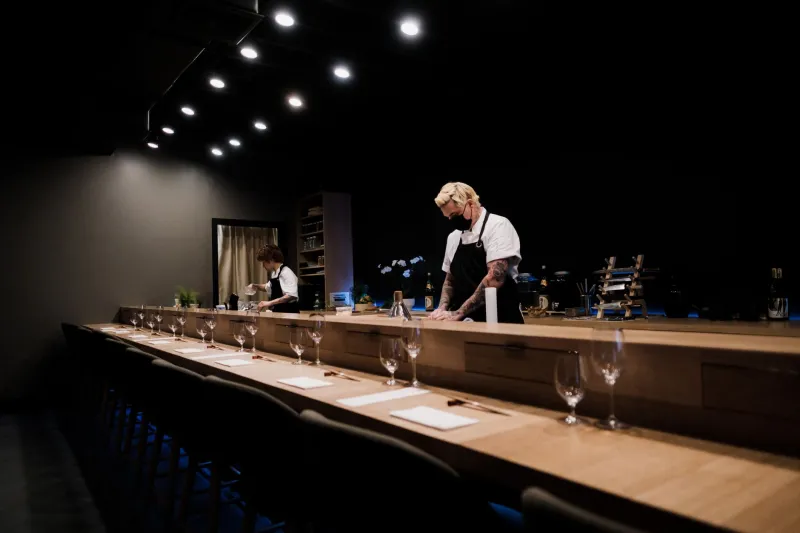
The best restaurants understand this intuitively. Watch how a seasoned server reads a table — they're not just clearing plates, they're gauging readiness. Are guests still picking? Still in conversation? Still sipping their wine? Those observations directly inform when the next course drops.
Europe Figured This Out a Long Time Ago
If you've ever had dinner in France, Spain, or Italy and thought the service was slow, you weren't wrong — but you may have been misreading it. In most of Western Europe, a multi-course dinner is understood to be an event, not a transaction. Two to three hours at the table is standard. Courses arrive with breathing room between them, and nobody's rushing you toward the check.
American dining culture runs on a different clock. We're optimized for efficiency. Turn the table, move the next party in, keep the kitchen firing. That's not a criticism — it's just a different set of cultural priorities. Fast-casual concepts built their entire identity around speed, and plenty of diners genuinely prefer it that way. But that efficiency-first mindset has crept into full-service dining in ways that don't always serve the guest.
When an appetizer hits the table three minutes after you've ordered, and your entrée arrives before you've finished your starter, something's been lost. The meal becomes a logistical exercise rather than an experience. You leave full but somehow unsatisfied — and often can't quite explain why.
The Psychology of the Pause
There's real science behind why intervals matter. Research in consumer psychology has shown that anticipation enhances pleasure. The brief wait between courses builds low-level excitement — a kind of culinary suspense that makes the arrival of the next dish feel like a small event. That moment when the server sets a beautifully plated entrée in front of you? It lands harder when you've had a few minutes to wonder what it'll look like.
Conversation also plays into this. Meals that are paced well create natural openings for people to actually talk to each other. You finish your soup, the bowl is cleared, and suddenly there's a window — no utensils in hand, no immediate task. That's when real conversation happens. Some of the most memorable meals people describe aren't about the food at all; they're about what was said in those quiet gaps between courses.
Restaurants that understand this aren't just feeding you — they're hosting you. There's a meaningful difference.
Slow Service vs. Intentional Pacing: How to Tell Them Apart
Here's where it gets nuanced, because not every long wait is purposeful. There's a real distinction between a restaurant that's thoughtfully controlling your rhythm and one that's simply backed up in the kitchen or understaffed on the floor. Knowing the difference can save you from either unfairly penalizing a great restaurant or giving a disorganized one too much credit.
A few things to look for:
Eye contact and presence. In a well-paced restaurant, your server checks in during intervals — not to rush you, but to stay connected. You feel attended to even when nothing is actively happening. If you're being ignored between courses, that's not pacing; that's neglect.
Consistency across the table. Intentional pacing is even. If your neighbor's entrée arrived twenty minutes before yours, that's a kitchen coordination issue, not a strategy.
How the gap feels. A well-managed pause feels comfortable — almost like the restaurant is breathing with you. An unmanaged delay feels like abandonment. You start looking around for your server. You check your phone. The spell is broken.
What happens at the transition. Watch how plates are cleared and courses are announced. Restaurants with genuine pacing intention treat these moments as small rituals. There's a purposefulness to it. The next dish is introduced, not just deposited.
How to Work With the Rhythm, Not Against It
If you're someone who tends to rush through meals — eating fast, signaling for the next course before you've really settled into the current one — it's worth trying something different. Slow down on purpose. Set your fork down between bites. Refill your water glass. Let the conversation breathe.
You might be surprised how much more you taste.
If you're dining somewhere that clearly has a thoughtful menu and a chef who cares, trust that the pacing is part of the offering. Resist the urge to flag down your server the moment your plate is cleared. Give the meal room to unfold.
And if you're planning a dinner party at home, think about pacing as one of your primary hosting tools. A well-timed gap between your salad course and the main gives guests a chance to refresh their appreciation — and gives you a moment to plate without chaos.
The Meal Is the Whole Thing
At TriMenu, we believe that a great dining experience is more than the sum of its dishes. It's the sequence, the setting, the conversation — and yes, the silence between courses. Those pauses are where digestion happens, where anticipation builds, where the meal becomes something you'll actually remember.
The next time you sit down to a dinner that genuinely moves you, pay attention to the intervals. Chances are, somebody thought carefully about them. And that attention to rhythm is exactly what separates a good meal from an unforgettable one.