Same Dish, Wildly Different Price Tags: What You're Really Paying For at Dinner

Photo by Photo by Janesca on Unsplash on Unsplash
Picture two plates of roast chicken. One arrives at a neighborhood bistro in Denver for $18. The other lands in front of you at a celebrated restaurant in Manhattan for $54. Both are golden-skinned, herb-scented, served with some variation of roasted vegetables. Both are, at their core, a chicken that has been cooked in an oven.
So why is one worth three times the price of the other? And more importantly — is it?
This is one of the most honest and useful questions you can ask as a diner, and it's one most of us never fully think through. We either accept a high price as a signal of quality or bristle at it as a rip-off, without doing the mental work of understanding what's actually baked into that number. Let's break it down.
The Ingredient Gap Is Real — But It's Not the Whole Story
The most obvious place to start is the ingredients themselves, and yes, sourcing matters. A restaurant using a heritage-breed chicken raised on a small farm in Pennsylvania is paying significantly more per bird than one buying commodity poultry from a large-scale distributor. Pastured eggs, heirloom grains, line-caught fish, single-origin spices — these things cost real money, and that cost flows directly into menu prices.
But here's what most diners underestimate: ingredient cost typically accounts for only 28 to 35 percent of a restaurant's menu price. The rest is everything else. Which means that when you're staring at a $52 pasta and trying to figure out what you're paying for, the answer is mostly not the pasta.
Labor: The Invisible Line Item
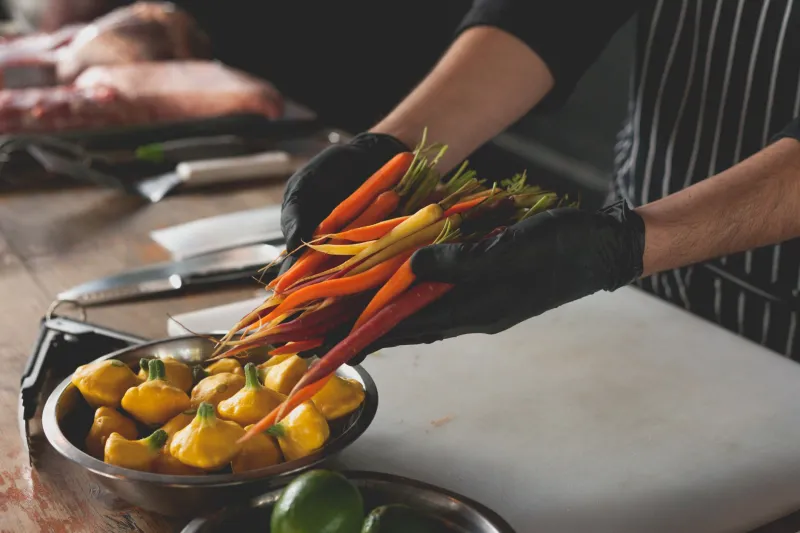
Technique is expensive. Not just because skilled cooks command higher wages — though that's absolutely part of it — but because ambitious cooking is time-consuming in ways that don't scale easily.
That $52 pasta might involve a dough that's rested for 24 hours, rolled by hand to a specific thickness, cut to order, and paired with a sauce that's been reducing on the stove for the better part of a day. The $14 version is likely made from a commercial dough, portioned in advance, and sauced with something that comes together in minutes. Both can be genuinely good. But they represent fundamentally different labor investments.
Fine dining kitchens often run with a higher cook-to-plate ratio than casual spots, meaning more hands are involved in getting your food to the table. A dish might pass through a prep cook, a saucier, a grill cook, and an expediter before it reaches you. That's not inefficiency — it's intentional craft. And it costs money.
The Real Estate and Ambiance Equation
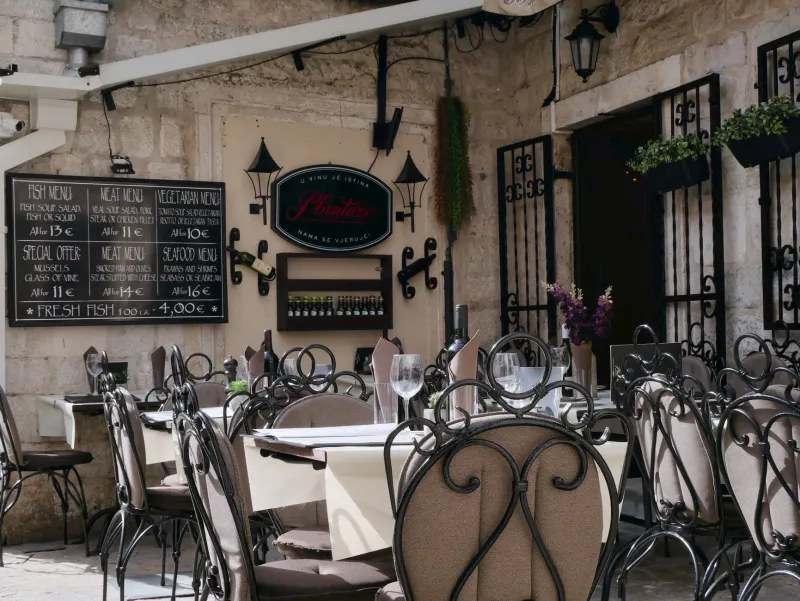
Where you eat is as much a part of what you're paying for as what you eat. A restaurant on prime real estate in Chicago's River North neighborhood is carrying rent costs that a strip mall spot in the suburbs simply isn't. Those costs get distributed across every plate that leaves the kitchen.
Ambiance is a legitimate product. The lighting design, the acoustics, the linens, the tableware, the sommelier who spends eight minutes walking you through a wine list — all of it is a service being delivered alongside your food. When you pay $45 for a steak at a well-designed restaurant versus $22 for a comparable cut at a sports bar, you're partly buying an environment. Whether that environment is worth the premium is a personal call, but it's not smoke and mirrors. It's a real cost the restaurant is bearing.
Culinary Vision and What It Actually Costs
This is the part that's hardest to quantify but arguably the most important. A restaurant with a genuine culinary point of view — a chef who has spent years developing a style, building relationships with suppliers, and training a team to execute a specific vision — is offering something that's genuinely scarce.
That scarcity has value. When a restaurant in New Orleans is dry-aging its own beef, making its own charcuterie, fermenting its own hot sauces, and running a pastry program with a dedicated chef, the overhead is substantial. The price on the menu reflects the investment in that identity, not just the cost of the ingredients on the plate.
Conversely — and this is where it gets interesting — not every expensive restaurant is actually delivering on that promise. Some high prices are driven more by brand cachet and clever positioning than by genuine culinary investment. A trendy spot in a hot neighborhood can charge a lot simply because the market allows it, not because the kitchen is doing anything exceptional.
How to Tell the Difference: Premium Value vs. Premium Positioning
So how do you evaluate whether a price gap reflects real excellence or just savvy marketing? A few practical approaches:
Look at the menu's depth and specificity. A restaurant that lists sourcing details, names specific farms or producers, and describes techniques in its menu copy is usually a kitchen that's actually doing the work. Vague, trend-chasing descriptions — "artisanal," "elevated," "crafted" — without substance behind them are often a sign that the brand is doing more heavy lifting than the food.
Evaluate the whole menu, not just the showpiece dishes. A kitchen with genuine skill shows it across the board. If the appetizers and sides feel as considered as the mains, that's a good sign. If the expensive restaurant has a weak supporting cast, the premium price may be concentrated in one or two marquee items designed to justify the restaurant's positioning.
Ask about what changes seasonally. A restaurant that updates its menu based on what's available from local suppliers is a restaurant with an active culinary mind. Static menus that never change are often built around consistency and cost control, not culinary ambition.
Read the kitchen's track record, not just the reviews. Awards, chef pedigree, and press coverage can signal genuine excellence — or they can be relics of a kitchen's past. A restaurant that earned a glowing profile three years ago may have changed staff significantly since then. Recent, specific reviews from credible sources are more useful than legacy reputation.
The $15 Dish That's Worth Every Penny
One more thing worth saying: price and quality don't move in lockstep. Some of the most exciting food in America comes from taco trucks, Vietnamese sandwich shops, and family-run diners where the overhead is low and the cooking is everything. Those places aren't cheap because the food is lesser — they're cheap because the model is leaner.
A smart diner learns to read price as context, not verdict. A $45 dish at a restaurant with serious culinary vision, farm sourcing, and a skilled team might be a bargain. A $45 dish at a place that's mostly selling atmosphere could be a disappointment. The menu, the room, and a little bit of research will usually tell you which one you're walking into.
Knowing the difference is exactly what separates a diner who just eats out from one who actually dines.