Forget the Script: Why the Best Restaurant Meals Don't Follow a Three-Course Formula
If you've sat down at a buzzy new restaurant recently and found yourself staring at a menu with no clear "entrees" section, you're not alone. The traditional three-course structure — appetizer, main, dessert — has been quietly dismantled at some of the most exciting dining rooms across the country, replaced by formats that are harder to categorize but, when done right, far more memorable.
This isn't just a trend for trend's sake. The shift reflects something genuine: a rethinking of how people actually want to eat, socialize, and experience a meal together. And for diners who've grown up with a clear script for how dinner is supposed to go, navigating these new formats can feel disorienting. It doesn't have to.
How We Got Here
The three-course model has deep roots in European fine dining traditions — a structure imported and formalized in American restaurants throughout the 20th century. It made practical sense: a clear progression gave kitchens a predictable workflow, helped servers pace the table, and gave diners a familiar framework for making choices.
But as American food culture matured and diversified, that rigidity started to feel constraining. Chefs who'd trained in Spain encountered the culture of tapas — small, shareable bites designed for grazing and conversation rather than formal progression. Others absorbed the omakase tradition from Japanese cuisine, where the chef, not the diner, dictates the flow of the meal. Meanwhile, the farm-to-table movement pushed kitchens toward menus that changed constantly based on what was available, making fixed three-course structures harder to sustain.
The result, in cities from Portland to Nashville to New York, is a dining landscape that looks genuinely different from what it did twenty years ago.
The Small-Plate Model: Freedom or Chaos?
Walk into a restaurant like Lazy Bear in San Francisco or Sepia in Chicago, and you'll encounter menus organized not around "starters" and "mains" but around a fluid sequence of smaller dishes meant to be shared and ordered in waves. The appeal is obvious: more variety, more conversation, more flexibility.
But the small-plate format has a failure mode that's worth understanding. When a restaurant goes small-plate without a clear editorial vision — without someone thinking carefully about how the dishes relate to each other — the meal can feel like a random collection of bites rather than a cohesive experience. You end up full but somehow unsatisfied, like you watched a playlist of great songs with no connective thread.
The best small-plate restaurants solve this by giving diners a recommended ordering sequence, or by having servers who are genuinely trained to help you build a coherent progression. If you're at a place like this, don't be shy about asking: "If we're ordering five or six things, what order would you suggest, and what makes sense together?" A good server at a well-run spot will have a real answer, not a shrug.
Practical tip for small-plate dining: Resist the urge to order everything at once. Order in two rounds — a few dishes to start, then reassess based on what you've tasted and how hungry you still are. This is how these menus are designed to be used.
The Tasting Menu Experience: Surrendering Control
At the opposite end of the spectrum from small-plate freedom is the tasting menu, where the chef makes every decision and you simply show up and receive. Places like Alinea in Chicago, Minibar in Washington D.C., or Atomix in New York have built their entire identity around this format — meals that can run eight to twenty-plus courses and last three hours or more.
For diners accustomed to control over their ordering experience, this can feel vulnerable. What if you don't love a particular course? What if the pacing feels off? The key mindset shift is understanding that a tasting menu is less like ordering dinner and more like attending a performance. You're not a customer selecting from options; you're a participant in a narrative the kitchen has constructed.
That framing changes everything. A dish that seems odd in isolation makes sense as part of a sequence. A palate cleanser you might have skipped on a regular menu suddenly feels essential between two rich courses. The structure is doing work you can't fully appreciate until you stop trying to evaluate each bite independently.
One thing worth doing before any tasting menu: Read the restaurant's approach online beforehand. Many of these spots publish their philosophy, their sourcing, or even a general sense of the meal's arc. That context makes the experience significantly richer.
Family-Style and Communal Dining: The Social Restructuring
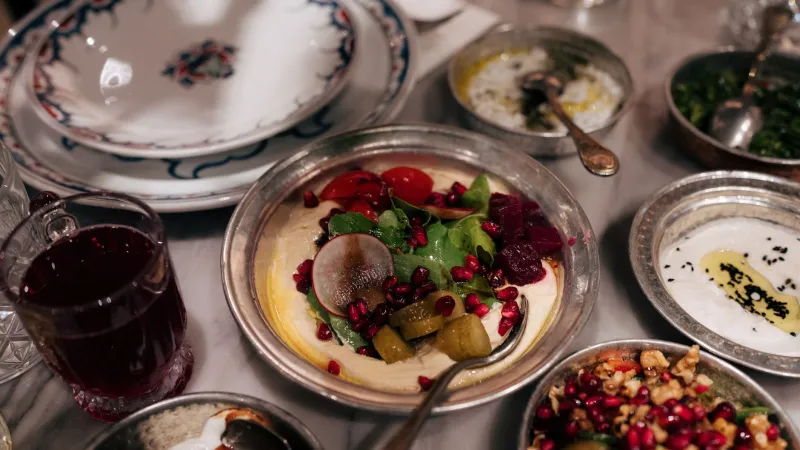
Then there's a third model that's gained serious traction, particularly in the South and in restaurants rooted in immigrant food traditions: family-style service, where large-format dishes arrive at the center of the table and everyone reaches in.
Restaurants like Zahav in Philadelphia or Nopalito in San Francisco have built their reputations partly on this communal approach. The meal becomes less about individual choice and more about shared experience — which, if you think about it, is closer to how most people eat at home than the traditional restaurant format ever was.
Family-style dining rewards groups that are willing to communicate and make decisions together. It can be awkward if one person at the table is a picky eater or has significant dietary restrictions, so it's worth flagging those concerns when you book rather than at the table.
What This All Means for How You Order
Across all of these formats, a few principles hold up:
Lean on your server more than you think you should. At restaurants with non-traditional structures, servers are often specifically trained to guide the experience. Use them. Ask about portion sizes, recommended quantities for your group, and the kitchen's intended sequencing.
Let go of the "main course" anchor. In traditional dining, most people silently organize their meal around the entree and treat everything else as supporting cast. In non-linear formats, there often isn't a main course — and trying to find one will make you misread the menu.
Calibrate your group size to the format. Small-plate and family-style dining almost always gets better with more people at the table. Two people at a small-plate restaurant can explore maybe six or eight dishes comfortably. Four people can cover the menu. Plan accordingly.
Trust the kitchen's sequencing when it's offered. If a restaurant sends dishes out in a particular order rather than all at once, that's intentional. Eating them in the order they arrive — rather than waiting until everything is on the table — usually serves the experience better.
The Bottom Line
The three-course meal isn't dead. It's still the right format for plenty of occasions and plenty of restaurants. But the most interesting dining experiences in America right now are happening in places that have moved beyond it — places where the structure of the meal is itself a form of creative expression.
Learning to navigate these formats isn't just about being a sophisticated diner. It's about getting more out of every meal you sit down to. And at the end of the day, that's what eating well is actually about.