Beyond the Main Course: Your Guide to Reading the Menus Most Diners Completely Ignore
Most of us treat the main menu like the main event and everything else like the supporting cast. You glance at the wine list, pick something in the middle price range, maybe ask for hot sauce if it's not already on the table, and move on. But here's the thing — those secondary menus? They're where a lot of the magic actually lives.
Craft beverage programs, curated wine lists, sauce selections, and condiment boards have quietly become some of the most thoughtfully designed elements of the modern American dining experience. The restaurants doing it right spend just as much time on their cocktail menu as their entrée list. And the diners who know how to read these extras? They're having a fundamentally different meal than everyone else at the table.
Here's your field guide.
1. The Wine List Is Telling You Something — Listen
A wine list isn't just a catalog of bottles. It's a statement of culinary identity.
A restaurant with a deep, regionally focused wine list — say, a heavy emphasis on natural wines from California's Central Coast or a tight curation of small-production Burgundies — is signaling something about how seriously they take the relationship between food and drink. A restaurant with 200 bottles but no coherent through-line is often just covering bases.
What to look for:
- By-the-glass variety. A strong by-the-glass program means the restaurant is confident enough in its selections to open bottles and trust guests to explore. Four or five thoughtful options across styles is more impressive than fifteen safe bets.
- Regional pairings. The best wine lists mirror the kitchen's inspiration. A Southern Italian menu with a solid selection of Sicilian whites and Campanian reds? That's intentional. That's a kitchen and a sommelier talking to each other.
- Price distribution. If every bottle clusters between $50 and $120, the list was built for safety. If there's genuine range — including interesting bottles under $40 — someone actually cares about accessibility.
Don't be afraid to ask your server what the sommelier or beverage director is excited about right now. That question alone tends to unlock better recommendations than pointing at a price point.
2. Craft Cocktail Menus Are a Preview of the Kitchen's Brain
The cocktail program at serious restaurants isn't designed in isolation. More and more, bar directors and executive chefs collaborate on flavor profiles — and a well-crafted cocktail menu often gives you a preview of the kitchen's approach before you've taken a single bite.
Look for these signals:
- Seasonal ingredients. If the cocktail menu changes quarterly and references the same local farms as the food menu, you're in a place that thinks holistically about what's fresh and available.
- House-made components. Infused spirits, shrubs, housemade syrups, and clarified juices are labor-intensive. Their presence signals a team that goes beyond the basics.
- Bitters and acid balance. Cocktails that use interesting bitters or citrus-forward profiles tend to pair beautifully with food. They're designed to complement rather than compete.
One underused move: order a cocktail as an aperitif, then transition to wine or a lower-ABV option with your main. Many cocktail menus are actually built with this arc in mind — the opening drinks are bright and appetite-stimulating, while later options are richer and more complementary to savory mains.
3. The Beer List Is Not an Afterthought (At the Right Places)
If you're at a barbecue joint, a gastropub, or a new-wave American diner, the draft list deserves real attention. Regional craft beer has become genuinely sophisticated, and a well-chosen IPA or farmhouse ale can do things with smoked brisket or fried chicken that no wine can quite replicate.
Look for local brewery names — in most major US cities, there's a thriving craft scene worth exploring. Ask the server what's rotating or seasonal. Tap lists often change weekly, and the freshest pours are usually the most interesting.
4. Sauce Selections and Condiment Boards: The Most Underrated Menu Category
This one flies under the radar, but it shouldn't.
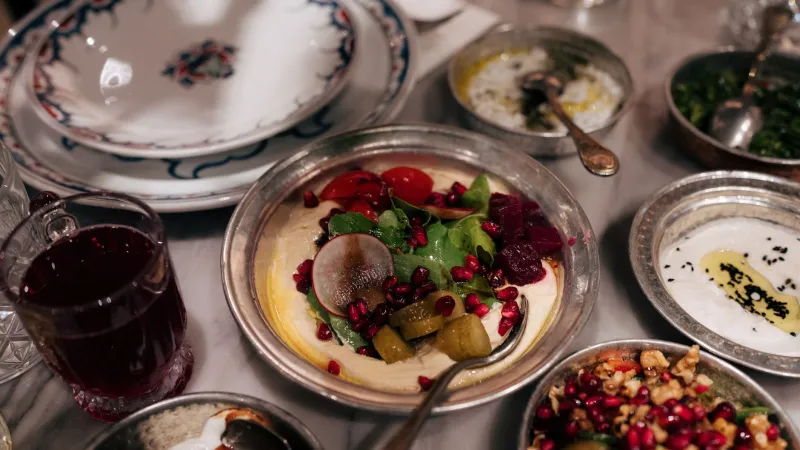
A growing number of restaurants — from upscale steakhouses to modern taco spots — now offer structured condiment or sauce menus. These aren't just hot sauce options dropped on the table. They're curated flavor tools designed to let you customize the meal's direction.
How to use them strategically:
- Read the descriptions. A chimichurri is bright and herby — great for cutting through fatty proteins. A romesco is earthy and rich — better for vegetables or lighter fish. Understanding what each sauce does gives you real control over your meal's arc.
- Don't default to your usual. If you always reach for ranch or sriracha, try whatever the restaurant made in-house. House sauces are almost always calibrated to work with the specific menu, and they often reveal something about the chef's flavor philosophy.
- Layer thoughtfully. The best condiment pairings add contrast, not just heat. A squeeze of charred lemon aioli on a crispy pork belly does something different than a vinegary hot sauce — both can be right, depending on what you want from the bite.
5. Non-Alcoholic Beverage Programs Deserve Serious Attention
This is the fastest-growing category in restaurant beverage culture right now, and it's genuinely exciting. Dedicated zero-proof menus — with house-fermented kombuchas, shrub-based drinks, clarified juices, and complex mocktails — are no longer a consolation prize for non-drinkers. They're a legitimate lens through which to experience a meal.
Spots like Chez Panisse in Berkeley and Eleven Madison Park in New York have elevated non-alcoholic pairing menus to an art form. But you'll also find serious NA programs at mid-tier restaurants across the country, especially in cities with strong wellness cultures like Austin, Portland, and Denver.
If you're curious, ask whether the restaurant offers NA pairings with their tasting menu or prix fixe. You might be surprised by what's available — and how much it changes the meal.
The Bottom Line: Read Everything on the Table
The best restaurant experiences aren't just about what you order off the main menu. They're about engaging with the full picture a kitchen and its team have put together. Every list, every board, every flight option is a door into a more complete version of what that restaurant is trying to do.
At TriMenu, we're always pushing for diners to go deeper — to ask more questions, explore more options, and treat every element of a menu as part of a larger conversation. The secondary menus are where that conversation often gets most interesting. Start reading them like they matter. Because they do.