Sweet Endings Gone Wrong: How to Read a Dessert Menu Like a Pro
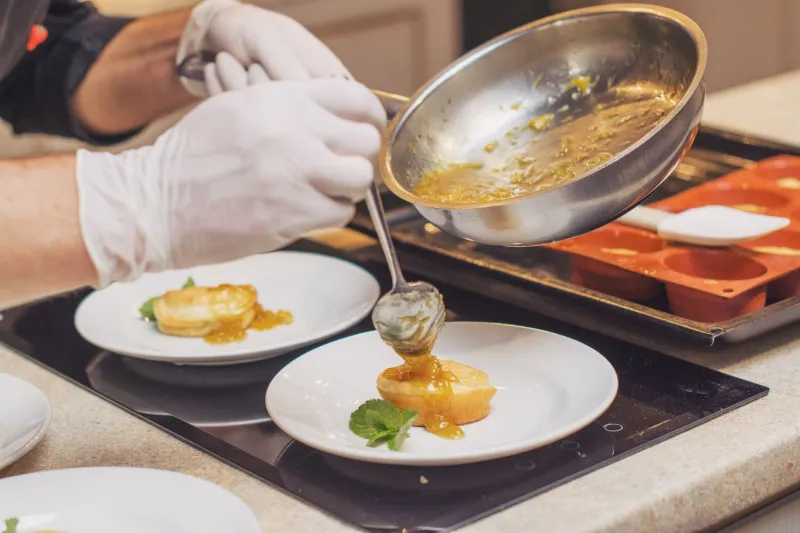
There's a moment at the end of almost every restaurant meal when the server slides a small laminated card across the table — or worse, recites a list from memory with the energy of someone reading terms and conditions. That's the dessert moment. And more often than not, it's a letdown.
It doesn't have to be. In fact, the dessert course might be the single most psychologically powerful part of a meal. Research on the "peak-end rule" — a concept from behavioral psychology — tells us that people judge an experience largely based on how it felt at its most intense point and how it ended. Translation: a mediocre dessert can quietly undo an otherwise excellent dinner. Restaurants know this. So why do so many still treat the sweet course like a footnote?
The Economics of the Afterthought
Here's the uncomfortable truth: for a lot of restaurants, dessert is a low-priority revenue play. The margins on a chocolate lava cake or a scoop of house-made ice cream can be decent, but the labor, storage, and skill required to build a genuinely compelling pastry program are significant. Many mid-range spots cut corners by outsourcing desserts entirely — ordering pre-made portions from a food service supplier and reheating or plating them in-house.
Nothing is inherently wrong with that if the product is good. But it often isn't. Those ubiquitous options — the towering slice of seven-layer chocolate cake, the generic cheesecake with a drizzle of raspberry coulis, the molten lava cake that hasn't evolved since 2003 — are almost always manufactured off-site and designed for mass appeal rather than culinary merit.
The tell? Portion sizes that are suspiciously uniform. Flavors that taste "correct" but not distinctive. A dessert menu that reads the same at a steakhouse in Dallas as it does at a casual Italian spot in Columbus. When the sweets section feels copy-pasted, it probably was.
Red Flags Worth Knowing
Before you order, take thirty seconds to actually read the dessert menu like the curated document it should be. Here's what to watch for:
Generic names with no specificity. "Chocolate Cake" or "Vanilla Bean Crème Brûlée" without any detail about sourcing, technique, or origin is a soft warning sign. Great pastry chefs tend to name things with intention — the chocolate has a provenance, the vanilla comes from somewhere specific.
A menu that hasn't changed in years. Ask your server when the dessert menu was last updated. If they look puzzled by the question, that's your answer. Seasonality matters in savory cooking; it matters just as much in pastry.
Mismatch with the rest of the meal. If a restaurant is sourcing local produce, working with regional farmers, and showing genuine culinary creativity in its appetizers and entrees, a dessert section that reads like a chain restaurant's offerings is a glaring inconsistency. The kitchen cares — the pastry program doesn't.
Only one or two options. A tight dessert menu isn't automatically a bad sign; some restaurants deliberately keep it small to maintain quality. But if those one or two choices are uninspired, there's nowhere to hide.
Where the Hidden Gems Actually Live
Savvy diners know that the best dessert experience at a restaurant isn't always on the printed menu. Here's how to dig deeper:
Ask about the cheese course. Plenty of American restaurants — particularly those with European influences or serious wine programs — offer a cheese selection that isn't prominently advertised. A well-curated cheese plate with honeycomb, seasonal fruit, and a few thoughtful accompaniments can be a far more satisfying finale than a generic brownie sundae.
Look for the kitchen's personality in the small stuff. Mignardises — those tiny confections sometimes brought with the check at higher-end spots — tell you a lot. A restaurant that sends you off with a house-made caramel or a seasonal fruit pâte de fruit is one that thinks about the full arc of your experience.
Talk to your server like a collaborator. Don't just ask "what's good for dessert?" Ask what the pastry chef is most proud of right now. Ask if there's anything not on the menu. Some restaurants rotate specials through their dessert program just like they do with savory courses, and those off-menu options are often where the real creativity lives.
Consider the timing. If you're genuinely full, skipping dessert and ordering a digestif or a single well-chosen sweet bite — a petit four, a small sorbet — is a completely valid move. A good restaurant will accommodate this without making you feel like you've broken a rule.
What Great Restaurants Do Differently
The establishments that consistently nail their dessert programs share a few common traits. First, they treat pastry as a discipline equal to savory cooking — which means hiring dedicated pastry talent, not just assigning desserts to a line cook with extra bandwidth.
Second, they think about contrast and pacing. A great dessert doesn't just taste good in isolation; it makes sense after what came before it. A heavy, butter-forward main course calls for something lighter and acidic to close — a citrus tart, a granita, a sorbet with brightness and lift. A lighter meal might welcome something more indulgent. The best pastry chefs are thinking about the full meal, not just their own course.
Third — and this is the part that's hardest to manufacture — they make it feel personal. The desserts at a truly great restaurant feel like they could only exist in that kitchen, in that city, at this particular moment in the season. That specificity is what turns a sweet course from a forgettable add-on into the thing you're still talking about the next morning.
The Takeaway
Next time you sit down to a meal, give the dessert menu the same critical attention you'd give to appetizers or mains. Notice whether it feels integrated with the rest of the experience or tacked on as an obligation. Look for signs of genuine craft — seasonal ingredients, specific flavor descriptions, evidence that someone in that kitchen actually cares about how your meal ends.
Because how it ends is, in a very real way, how you'll remember the whole thing. And you deserve a finale that earns its place at the table.