First Bite to Last: How the Sequence of Your Meal Shapes Everything You Taste
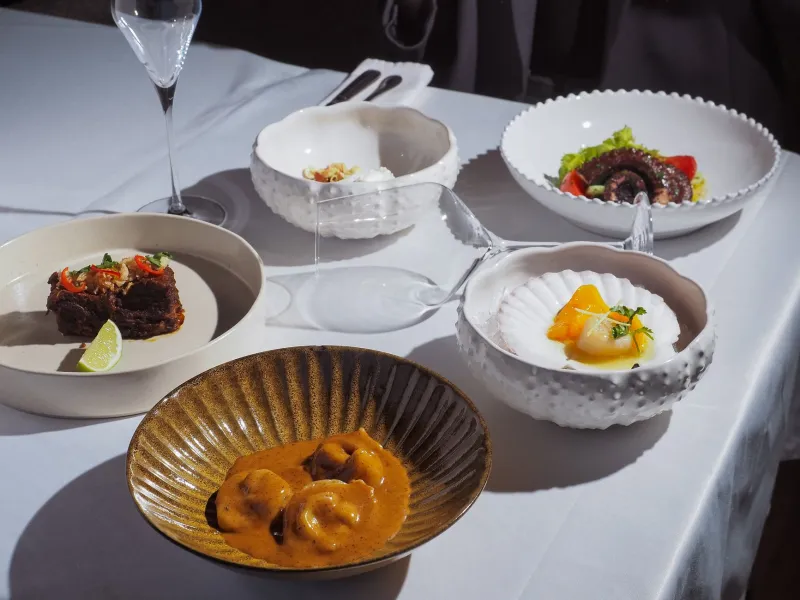
There's a moment near the end of a truly great tasting menu when you realize you haven't checked your phone in two hours. You've been somewhere else entirely—carried along by a current you didn't consciously feel. That current has a name: it's called sequencing, and it's one of the most underappreciated forces in professional cooking.
The order of your courses isn't a formality. It's a strategy. And once you understand how it works, you'll never look at a menu the same way again.
Your Palate Has a Memory (And Chefs Know It)
Human taste perception isn't static. What you ate three minutes ago changes how your tongue and brain interpret what you're eating right now. This is called sensory adaptation, and it's the foundational reason why sequence matters at all.
When you eat something sweet, your sweetness receptors become temporarily less sensitive—meaning the next sweet thing you taste will register as less intense. The same principle applies to salt, fat, acidity, and bitterness. Professional chefs exploit this constantly. A bright, acidic course placed early in a meal doesn't just taste good on its own—it resets the palate, making subsequent flavors land with greater clarity and punch.
This is why a classic French meal opens with something light and often acidic: a simple salad with vinaigrette, a citrus-dressed crudo, or a chilled soup. These aren't just polite appetizers. They're calibration tools.
The Arc of Intensity: Building Toward Something
Think of a well-sequenced meal the way you'd think of a great road trip playlist. You don't open with the loudest song. You build.
Fine dining kitchens across the country—from Eleven Madison Park in New York to Atelier Crenn in San Francisco—design their menus around a deliberate escalation of flavor intensity. Delicate dishes lead. Rich, complex preparations follow. The idea is to preserve your ability to actually taste what's in front of you.
If a kitchen fires a butter-poached lobster with truffle cream sauce as your second course, your palate is essentially blown out before the evening gets interesting. Everything after registers as muted. Contrast that with a kitchen that serves that same dish as the fifth of eight courses, preceded by lighter vegetable preparations and a clean seafood bite—suddenly that lobster is a revelation.
This is the architecture of appetite. Chefs call it flavor progression, and it's as carefully considered as any structural element of the food itself.
Palate Fatigue: The Enemy You Didn't Know You Had
Palate fatigue is real, and it's sneaky. After sustained exposure to rich, fatty, or intensely flavored foods, your ability to distinguish nuance drops off significantly. You're still eating—but you're not really tasting anymore.
Smart menu sequencing fights this with strategic intermezzo moments: small, refreshing bites or sips designed to interrupt the richness and restore sensitivity. The classic sorbet course that appears mid-meal at old-school steakhouses and French restaurants isn't just tradition—it's physiological maintenance. A small scoop of lemon or Campari sorbet literally revives your palate's ability to register what comes next.
More contemporary kitchens have gotten creative with this. You might encounter a single oyster with mignonette, a tiny cup of dashi broth, or a sliver of pickled vegetable between courses. The format changes; the function stays the same.
The Psychology of the Final Bite
Here's something that might surprise you: research in behavioral economics and food psychology consistently shows that people remember the last part of an experience more vividly than the middle. This is known as the peak-end rule, and it has enormous implications for how restaurants design their closing courses.
A dessert isn't just a sweet ending—it's the emotional signature of the meal. It's what you'll tell your friends about. Pastry chefs at serious restaurants understand this intuitively, which is why dessert menus at places like Alinea or The French Laundry are engineered with as much intention as any savory course. The goal isn't just to satisfy a sweet tooth; it's to leave you with a feeling you'll carry out the door.
Interestingly, the peak-end rule also means that a weak dessert can retroactively diminish an otherwise excellent meal in your memory. A brilliant main course followed by a forgettable slice of dry cake lands differently than it should. The sequence shapes the story—and the ending writes the headline.
What This Means for Home Cooks
You don't need a Michelin star to apply these principles at your next dinner party. A few practical takeaways:
Start light, always. Whether it's a simple salad, a citrus-forward appetizer, or even just a good sparkling water with lemon, give your guests' palates a chance to wake up before you throw richness at them.
Save your showstopper. Your most complex, indulgent dish should arrive when hunger is still present but the palate is warmed up—usually the third or fourth course in a longer meal, or simply your main course if you're keeping things simple.
Don't skip the reset. A small intermezzo between a rich appetizer and your main course does more than it gets credit for. Even something as simple as a small bowl of broth or a few pickled vegetables gives everyone's palate a moment to breathe.
Finish with intention. Your dessert—or your final savory bite if you're skipping sweets—is what lingers. Make it count. It doesn't have to be elaborate, but it should feel like a conclusion, not an afterthought.
The Menu Is the Experience
At TriMenu, we spend a lot of time thinking about what makes a meal genuinely memorable—and the honest answer is that it's rarely just one dish. It's the journey from first bite to last. The best restaurants in the country understand that they're not just feeding you; they're guiding you through a deliberate sensory experience with a beginning, a middle, and an end.
That understanding lives in the sequence. And now that you know it's there, you'll start to feel it every time you sit down to a thoughtfully constructed meal.