Beginning, Middle, End: How Great Chefs Turn a Meal Into a Memory
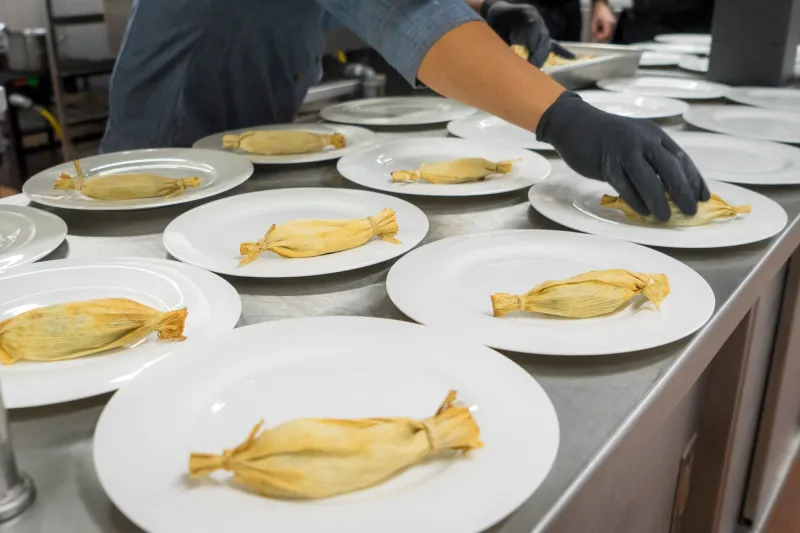
There's a reason you still remember that one dinner — the one where everything just clicked. The food came out in the right order, each dish felt like it was building toward something, and by the time dessert landed on the table, you were almost sad to see it end. That wasn't an accident. It was architecture.
Chefs at the top of their game think about menus the way novelists think about chapters. Every plate has a role to play, and the sequence matters just as much as the ingredients. At TriMenu, we're obsessed with what makes a dining experience genuinely great — and that obsession keeps leading us back to the same place: the three-course progression.
Why Three Courses? It's Not Just Tradition
The appetizer-entrée-dessert framework has been around for centuries, and it's easy to dismiss it as a relic of old-school French dining etiquette. But talk to working chefs, and you'll hear something different. The structure persists because it mirrors something fundamental about how humans experience narrative — a beginning that opens the door, a middle that delivers the heart of the story, and an ending that gives you something to carry home.
"The first course is your handshake," says one James Beard-nominated chef from the Pacific Northwest. "It tells the guest who you are before you've even said anything important. If you blow the opener, you're playing catch-up for the rest of the night."
That opening course — whether it's a delicate crudo, a composed salad, or a single perfect bite of something unexpected — is doing a lot of heavy lifting. It's calibrating the diner's palate, setting the flavor register for what's to come, and establishing the restaurant's personality. Acidic, bright flavors tend to wake up the senses. A rich, fatty opener, by contrast, can feel like a false start — like beginning a novel with the climax.
The Science Behind Flavor Sequencing
Menu design isn't purely intuitive — there's genuine food science behind how dishes are ordered. Chefs and culinary researchers talk about "palate fatigue," the phenomenon where repeated exposure to bold or heavy flavors causes the taste receptors to essentially check out. A well-designed progression avoids this by varying intensity, texture, and flavor profile throughout the meal.
The general principle: move from light to rich, from subtle to assertive, from cool to warm. Acidic elements early in the meal stimulate saliva production and prime the palate for more complex flavors. Salt and umami build across courses, reaching their peak in the entrée. And by the time dessert arrives, the palate is ready for sweetness — not because it's dessert's "turn," but because the preceding courses have created the contrast that makes sweetness satisfying rather than cloying.
Some of the most innovative tasting menus play with this formula intentionally. A savory course with dessert-like qualities — think a beet preparation that mimics chocolate in texture and depth — can create a productive disorientation that keeps diners engaged. The best chefs know exactly when to follow the rules and when to break them in a way that feels earned.
The Middle Course Is Where the Story Lives
If the appetizer is the handshake, the entrée is the conversation. This is where chefs tend to put their most technically demanding and emotionally resonant work. A perfectly braised short rib, a whole roasted fish served tableside, a mushroom dish that somehow tastes more like meat than anything with a face — the entrée is the main argument the kitchen is making.
But here's something that often gets overlooked: the entrée only lands as hard as the appetizer set it up to. Chefs talk about "earning" the richness of a main course. If the first course was light and bright, the entrée's weight feels like a reward. If the opening was already heavy, the main course has nowhere to go.
"I think of the entrée as the thesis statement," one Michelin-recognized chef from Chicago explained. "Everything before it is the setup. Everything after it is the resolution. If the thesis is muddled, the whole essay falls apart."
Dessert as Resolution, Not Afterthought
Dessert gets a bad rap in some food circles, dismissed as the obligatory sweet thing you eat while waiting for the check. But in a thoughtfully designed menu, the final course is actually doing something sophisticated — it's providing emotional resolution.
The best desserts don't just taste good. They echo something from earlier in the meal, creating a sense of closure that feels intentional rather than arbitrary. A savory herb used in the appetizer might reappear in a dessert garnish. A citrus note that ran through multiple courses finds its final expression in a tart, airy mousse. These callbacks aren't accidental — they're the culinary equivalent of a callback in a great comedy set, or a motif returning in the final movement of a symphony.
Here's a note for home cooks and dinner party planners: you don't need a pastry chef's résumé to apply this thinking. Even something as simple as a citrus sorbet after a rich pasta dinner demonstrates an understanding of balance and progression. The goal isn't complexity — it's intentionality.
Bringing This Home: Planning Your Own Three-Act Dinner
You don't need a tasting menu budget or a professional kitchen to think like a chef when you're feeding friends. Here's a simplified framework:
Start with the middle. Decide your entrée first, because that's the anchor of the meal. Everything else orbits around it.
Work backward to your opener. If the main is rich and hearty — a braise, a roast, a pasta — your first course should be light and acidic. A simple salad with bright vinaigrette, a shrimp cocktail, a bruschetta with fresh tomato. If the main is lighter (grilled fish, a vegetable-forward dish), you have more room to play with a slightly richer starter.
End with contrast, not repetition. If dinner was savory and heavy, go light on dessert — a fruit crisp, a panna cotta, a good cheese plate with honey. If the meal was subtle and restrained, you can afford a more indulgent finish.
Think about one connecting thread. A single ingredient, flavor, or technique that appears in two or more courses gives the meal a sense of cohesion without feeling gimmicky. Seasonal produce works especially well here — stone fruit in summer, root vegetables in fall — because it grounds the meal in a specific time and place.
The Meal as Experience
What separates a genuinely memorable dinner from a good one is usually this: intention. The best meals feel like someone thought hard about the order of things, about how one dish would make you feel before the next one arrived. That level of care is what the three-course structure, at its best, is designed to support.
At TriMenu, we believe that dining — whether you're at a three-Michelin-star restaurant or your own kitchen table — is worth thinking about seriously. The next time you sit down to a meal that really works, pay attention to the arc. Chances are, someone built it on purpose.