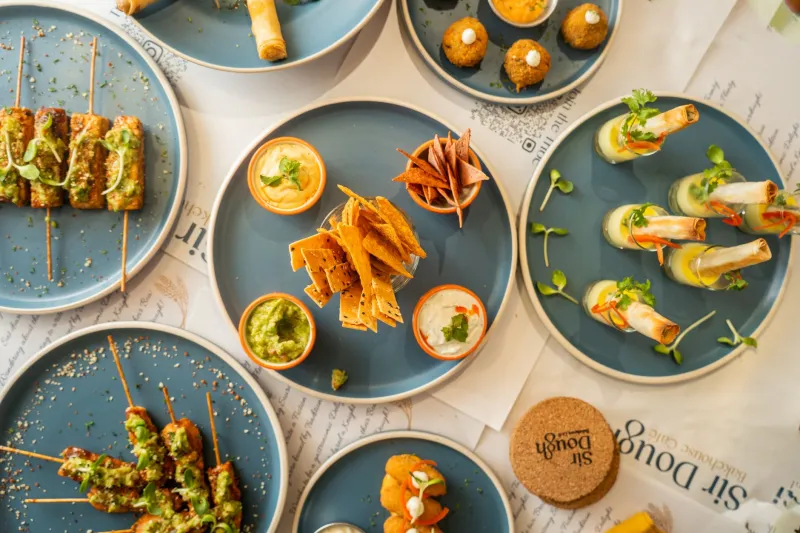
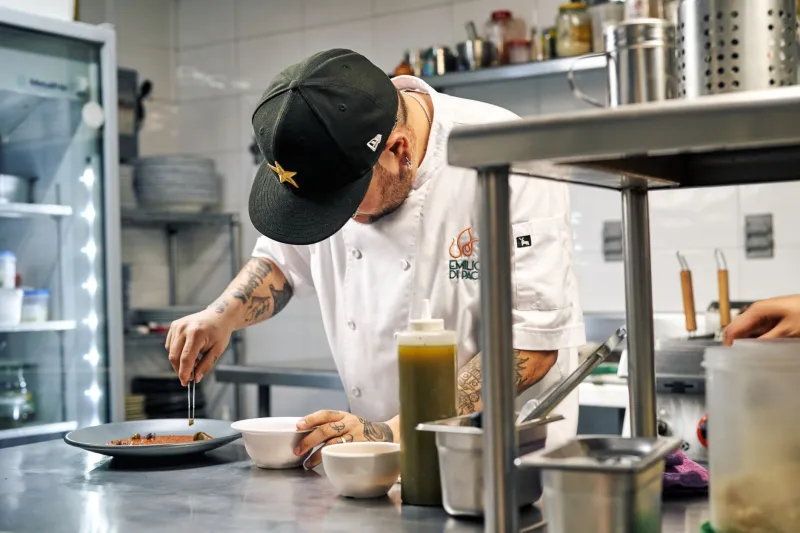
One Bite Before the Menu Begins: What Pre-Appetizer Offerings Say About a Chef's Ambition
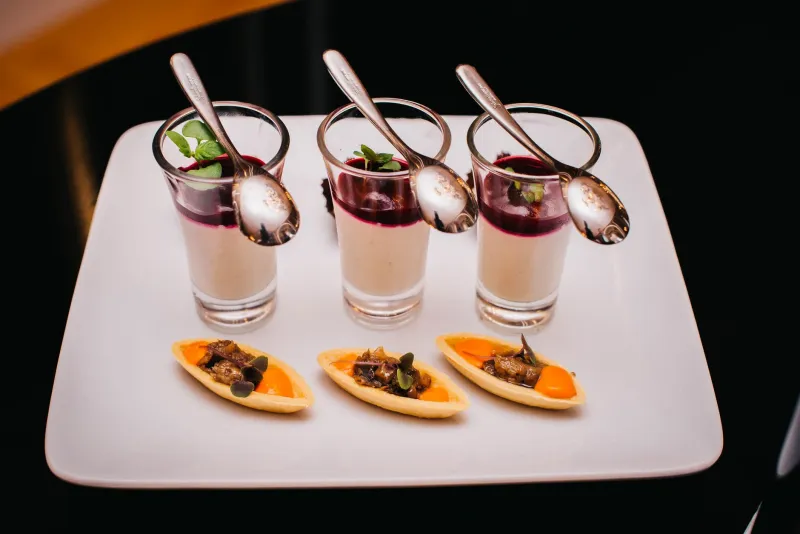
You've just been seated. The server sets down your water, maybe a bread basket, and then — without you asking for a single thing — a tiny spoon appears. Or a miniature ceramic cup. Or a single crisp bite balanced on a slate tile. Nobody ordered it. Nobody charged you for it. And yet, it might be the most important thing you eat all night.
Pre-appetizer offerings — the amuse-bouche, the palate cleanser that appears before anything else, the little chef's greeting — have been a fixture in fine dining for decades. But something is shifting. More restaurants across the US, from tasting-menu destinations in New York and Chicago to ambitious neighborhood spots in cities like Nashville and Portland, are leaning into this pre-course moment with real intention. And a growing number of savvy diners are starting to read it like a first chapter of a book — because that's exactly what it is.
What's Actually Happening in That Tiny Bite
The French term amuse-bouche translates roughly to "mouth amuser," which sounds a little whimsical but undersells what's really going on. In a serious kitchen, that one bite is a deliberate editorial statement. The chef isn't warming up. They're telling you their point of view before you've committed to anything.
Think about it from a culinary strategy angle: the pre-app is the one moment on the menu where a chef has complete creative control with zero customer expectation attached. You didn't ask for it, you won't send it back, and you have no frame of reference to compare it against. That freedom is rare in a restaurant setting. How a kitchen uses that freedom — or whether it uses it at all — says a lot.
A chef who sends out a single oyster with a house-made mignonette granita is telling you they're precise, seasonal, and confident in restraint. One who delivers a tiny taco built from scratch components is telling you they're playful and technically capable. And a restaurant that skips the pre-app entirely? That's a statement too — just a different one.
The Budget Argument (It's More Complicated Than You Think)
Here's where the conversation gets interesting. A lot of people assume that pre-appetizer bites are purely a luxury-tier move — something only $200-a-head tasting menu restaurants bother with. But that assumption misses the real economics at play.
Yes, producing a complimentary bite for every table costs money. Labor, ingredients, plating time — none of it is free. But elite kitchens that invest in this moment aren't just being generous. They're making a calculated bet that the first impression will justify the entire price point of the meal that follows. It's essentially a marketing cost baked into the dining experience.
What's more interesting is what happens when mid-range restaurants start adopting the practice. A neighborhood bistro in Denver or an upscale-casual spot in Atlanta that sends out a small, well-executed amuse is doing something quietly bold: it's signaling that the kitchen has enough bandwidth and creative energy to go beyond what's strictly required. That kind of voluntary effort is harder to fake than a polished menu design or a trendy cocktail list.
On the flip side, some high-end restaurants have started pulling back on pre-apps entirely — and not because they can't afford them. Post-pandemic staffing pressures and a broader industry shift toward streamlined service have led some kitchens to cut what they see as non-essential steps. When a restaurant that used to offer a chef's greeting stops doing so, it's worth noticing. It doesn't mean the food will be worse. But the menu architecture has changed, and that tells you something about where priorities have shifted.
How to Actually Read the Pre-App
If you want to use that first bite as a genuine piece of dining intelligence, here's how to approach it:
Notice the temperature and technique. A properly executed amuse requires timing precision. If it arrives lukewarm when it should be cold, or soggy when it should be crisp, that's a real data point about kitchen execution — not a fluke.
Look at the ingredient choices. Is the kitchen leaning on what's in season? Are there components that feel house-made versus clearly sourced from a prep shortcut? The pre-app, because it's unchosen and uncharged, often reflects the kitchen's default instincts more honestly than a $45 entrée that's been focus-grouped to death.
Pay attention to portion confidence. A pre-app that's overly modest — a single cracker with a smear of something indistinct — can signal a kitchen that's uncertain how to calibrate generosity. A bite that's genuinely interesting and satisfying without overpromising shows real balance.
Ask about it. Seriously. If something lands on your table before you've ordered, asking your server about it is one of the best moves you can make. The answer (or the server's inability to give one) tells you a lot about how well the front and back of house are communicating.
The Restaurants Doing This Well Right Now
Across the US, the restaurants most committed to the pre-app moment tend to share a few traits. They're usually chef-driven rather than group-operated. They tend to have tighter menus with deeper focus rather than sprawling options. And they typically treat the dining experience as a sequence — a meal with a beginning, a logic, and a throughline — rather than a collection of individual dishes.
You'll find this sensibility at ambitious prix-fixe spots, but also increasingly at the kind of independent American restaurants that don't quite fit the "fine dining" label but clearly aspire to something beyond the average. These are the places where the kitchen is thinking about your entire arc as a diner, not just your entrée order.
It's also worth noting that some of the most memorable pre-app moments in recent years have been startlingly simple: a single roasted carrot chip with whipped tahini; a thimble of chilled corn soup in August; a tiny cube of housemade bread with cultured butter and flaky salt. None of these require a brigade of cooks or a Michelin star. They just require a kitchen that's paying attention.
Why It Matters for How You Dine
For food enthusiasts who care about the full picture of a meal — not just the headliner dishes — the pre-app is one of the most underutilized pieces of dining intelligence available. It's a free sample of a kitchen's philosophy, offered before you've spent a dime on food.
Next time something lands on your table unbidden, resist the urge to reach for your phone or keep talking through it. Take a second. Taste it carefully. Think about what it's telling you.
Because a chef who takes the time to greet you with one considered, complimentary bite is a chef who's thought about the whole meal — and that's exactly the kind of kitchen worth paying attention to.