The Menu's Middle Child: What Restaurants Do With Mid-Range Entrees Tells You Everything
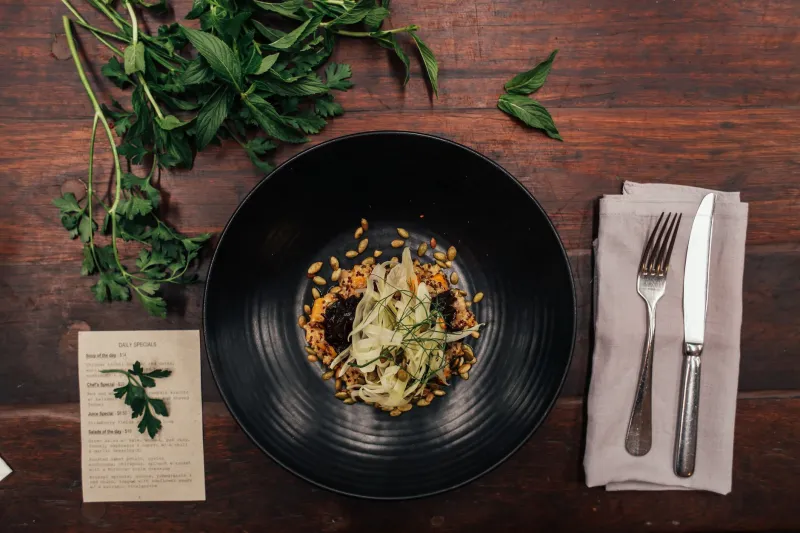
Every restaurant has its headline act. Maybe it's the $68 dry-aged ribeye anchoring the bottom of the menu, or the Instagram-ready tasting experience that requires a reservation three weeks out. On the other end, there are the small plates—the shareable snacks and composed bites that food media loves to photograph and diners love to argue over. These are the things that get the attention, the press, the social media real estate.
And then there's the middle. The $18 chicken thigh. The $24 pasta with braised pork. The $22 pan-seared fish that doesn't have a fancy origin story attached to it. Nobody's writing think-pieces about these dishes. Critics rarely lead with them. Diners often skip past them on their way to the marquee items.
That's a mistake. Because the mid-price entree range—roughly the $18-to-$28 band in most US markets—is the most honest part of any menu. It's where kitchens can't hide behind luxury ingredients or the novelty of a format. It's where skill either shows up or it doesn't.
Why This Tier Gets Ignored
The psychology here is pretty straightforward. Dining out involves a mix of aspiration and anxiety, and both of those feelings pull diners away from the middle of the menu.
Aspiration pulls people toward the top. If you're treating yourself, or trying to impress someone, or just curious what all the fuss is about, you go for the marquee item. It's the thing the restaurant is most known for. It's the thing that feels like the full experience.
Anxiety, ironically, pulls people toward the small plates. Ordering a bunch of shareable dishes feels lower-stakes—you're not committing to one big choice, and if something's not great, you haven't lost the whole meal. Small plates also tend to be more forgiving of mediocre execution because there's so much else on the table.
The mid-range entree sits in an uncomfortable middle ground. It's not exciting enough to feel like a splurge and not casual enough to feel risk-free. So a lot of diners just... skip it.
Food critics do something similar, though for different reasons. A review that leads with the $24 braised chicken is a hard sell. Readers want to know about the showstoppers. The mid-tier dishes tend to get a sentence or two at most—"the chicken was solid"—and then the piece moves on.
What These Dishes Are Actually Carrying
Here's the thing about mid-range entrees: they're often doing the heaviest lifting in the entire kitchen.
The $68 ribeye mostly needs to be sourced well and not overcooked. The ingredient is doing most of the work. The small plates can be clever and composed without requiring deep technique—a beautiful crudo is about quality fish and a sharp knife, not necessarily years of culinary training.
But a $22 roast chicken? A $24 hand-rolled pasta with a braised meat sauce? Those dishes live or die on fundamental cooking skill. Temperature control, seasoning, timing, sauce work, understanding how flavors develop over a long braise—all of that has to be right for a mid-range dish to be worth ordering. There's nowhere to hide. You can't charge more to compensate for mediocre execution, and you can't distract with novelty.
Restaurants that genuinely care about their craft tend to have mid-range entrees that are quietly spectacular. Not showy. Not Instagram-bait. Just really, really well-made food at a price that reflects honest value. These are often the dishes that chefs themselves are most proud of—the ones that require the most discipline to execute consistently.
The Red Flags in the Middle
Conversely, a weak mid-tier is one of the clearest signs that a restaurant's priorities are out of order.
Watch for mid-range entrees that read like afterthoughts—generic proteins with interchangeable sides, dishes that don't have a clear point of view, things that feel like they exist to fill out the menu rather than because anyone in the kitchen is excited about them. If the $23 salmon looks like it could have come from any of twenty other restaurants in your city, that's a tell.
Also watch for the price-to-description gap. If the mid-range entrees have vague, minimal descriptions while the luxury items get three lines of poetic copy, the kitchen is telling you where its attention goes. The food that gets described with care is the food that gets made with care.
High labor turnover in a kitchen often shows up in the middle of the menu first. The marquee dishes get protected—they're the ones the chef is watching closely. The small plates are simple enough that most line cooks can execute them. But the mid-range entrees, which require both skill and consistency, suffer when the kitchen is understaffed or under-trained.
How to Use This When You're Actually Ordering
Next time you sit down at a restaurant you haven't been to before, spend a little extra time in the middle of the menu. Read those mid-range entrees carefully. Ask your server which ones the kitchen is most confident about—not which ones are most popular, but which ones the kitchen executes best. A good server will know the difference.
If a mid-range dish has been on the menu for a long time, that's usually a good sign. Restaurants don't keep things around that don't work. A dish that's been there through multiple menu cycles has earned its place through consistent execution and repeat orders—the most honest form of quality control there is.
And if you order one and it's genuinely great—properly seasoned, thoughtfully composed, cooked with obvious care—tip well and tell someone. Those dishes deserve more attention than they get. They're the ones that keep a restaurant honest.