The Room Is Talking: How Restaurant Design Quietly Decides What You'll Order Tonight
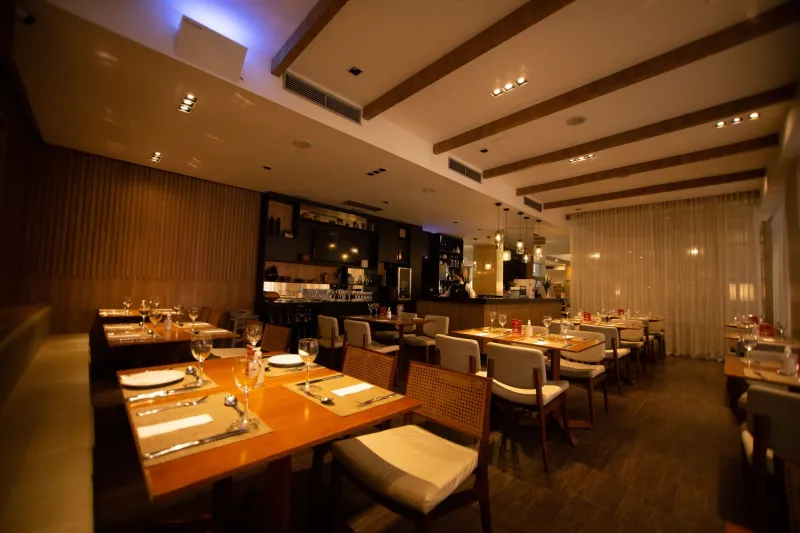
You walk in, get seated, and scan the room. Nice place. Good vibe. You pick up the menu feeling like every choice you're about to make is entirely your own. Here's the thing: it isn't. Not entirely, anyway. Long before the server comes over to explain the specials, the restaurant has already been working on you. The lighting, the wall art, the distance between tables, even the chair you're sitting in—all of it is part of a carefully constructed system designed to shape your perception of value and steer your ordering hand.
This isn't conspiracy territory. It's just smart hospitality design, layered on top of decades of behavioral research. And once you know what to look for, dining out starts to feel a little bit like watching a magic trick from behind the curtain.
What the Light Is Actually Doing to You
Lighting is probably the single most underappreciated tool in a restaurant's design arsenal. Dim, warm lighting creates intimacy—and intimacy, it turns out, makes people more comfortable spending money. Studies in consumer psychology have consistently shown that lower light levels reduce self-consciousness and encourage what researchers call "indulgent" decision-making. That second glass of wine? The wagyu upgrade? The dessert you told yourself you wouldn't order? Soft lighting is quietly co-signing all of it.
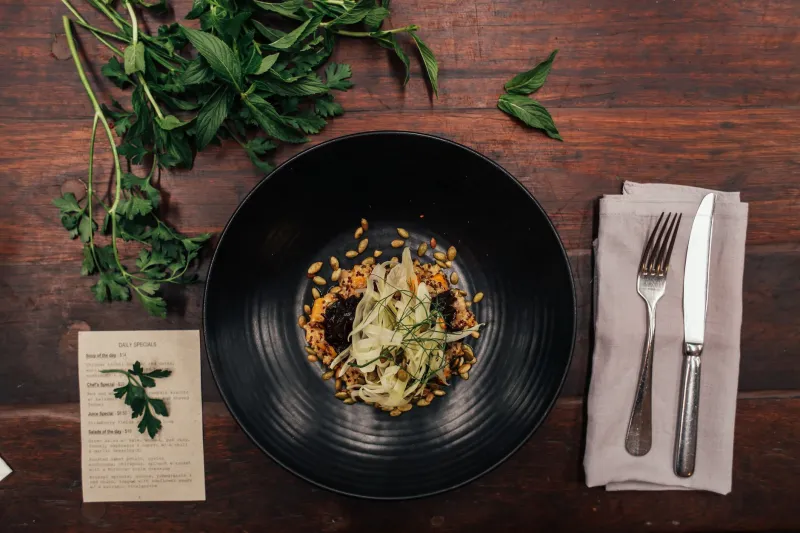
But there's a more specific trick at play too. Upscale restaurants often use directional spotlighting above tables to make the food itself look more dramatic and beautiful when it arrives. That's not an accident. It's the same principle a photographer uses to make a dish look irresistible—except it's happening live, in real time, with your actual plate. When your food arrives looking like it belongs on a magazine cover, you feel better about what you paid for it before you've even tasted it.
Casual chains lean the other direction. Brighter, more uniform lighting speeds up the dining experience and makes the whole thing feel more transactional—which is exactly what a table-turn-focused operation wants.
The Wall Art Isn't Just Decoration
Next time you're waiting for your appetizer, take a closer look at what's on the walls. In a lot of restaurants—especially mid-range spots trying to punch above their weight—you'll find oversized food photography or illustrated ingredient prints. These aren't there because the owner has a passion for art. They're there to prime you.
Large-format images of specific dishes or ingredients plant visual cues that influence what you order. If you've been staring at a gorgeous photo of a slow-braised short rib for twenty minutes, you're meaningfully more likely to order the braised short rib when the server asks what you're having. Exposure drives familiarity, and familiarity drives selection—especially when you're slightly overwhelmed by a long menu.
Some restaurants take this further with menu boards or chalkboard displays that highlight specific items. The framing isn't random. High-margin dishes almost always get the biggest font, the most descriptive language, or the most prominent position on the board.
Table Placement and the Illusion of Choice
Where you sit matters more than you'd think. Tables near the kitchen or the bar tend to create ambient cues—you see dishes coming out, you hear the sounds of preparation, you smell things before they reach you. All of that sensory input primes your appetite and often pushes you toward ordering more, or ordering specific things that are passing by.
Some restaurants deliberately route servers through the dining room in ways that expose certain tables to the most visually appealing dishes. A beautifully plated entrée carried through the room at eye level is essentially a live advertisement. You didn't ask to see it, but now you want it.
Private or semi-private seating, on the other hand, tends to create a different psychological environment—one that feels more exclusive and often correlates with higher per-table spending. The physical separation from the main dining room signals a different tier of experience, and diners in those spaces tend to behave accordingly.
Eye-Level Menus and the Premium Placement Game
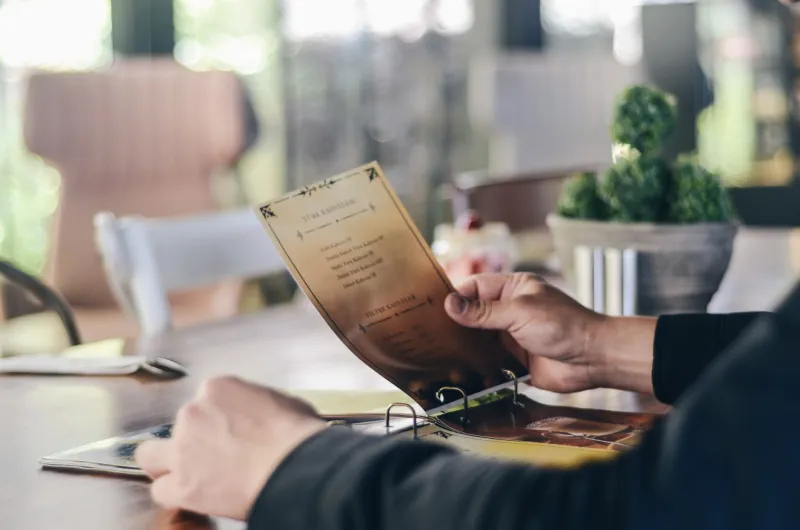
Physical menus are their own kind of architecture. The most-studied phenomenon in menu design is what restaurateurs call the "sweet spot"—the upper-right quadrant of a two-page menu layout, which is where most diners' eyes land first. That's where high-margin items live. Not the most expensive things on the menu, necessarily, but the ones with the best profit profile.
Restaurants that use display cases—think French patisseries, raw bars, or steakhouses with open butcher counters—place their most premium items at eye level, front and center. The lobster tail. The prime dry-aged tomahawk. The hand-decorated tart with the gold leaf on top. These items aren't always the biggest sellers, but they anchor the room's sense of quality and make everything else feel like reasonable value by comparison. That's called price anchoring, and it works.
So What Can You Actually Do About It?
Knowing the tricks doesn't make you immune to them, but it does give you a little more agency. Before you sit down and let the room take over, try reading the menu outside or online if you can—away from the ambient influence of the space. Notice which items the restaurant is pushing hardest through its physical design, and ask yourself whether your interest in those dishes is genuinely appetite-driven or environmentally manufactured.
Pay attention to the middle of the menu—the items that aren't spotlit or chalked up on a board. Those are often where the real value and the most confident cooking live, precisely because they're not being propped up by design tricks.
And if you find yourself ordering the braised short rib because it's what you've been staring at on the wall for half an hour? That's fine. Sometimes the room knows what it's doing. Just know that you know too.