Eggs Benedict Fatigue: How to Tell a Real Brunch Menu From a Bottomless Trap
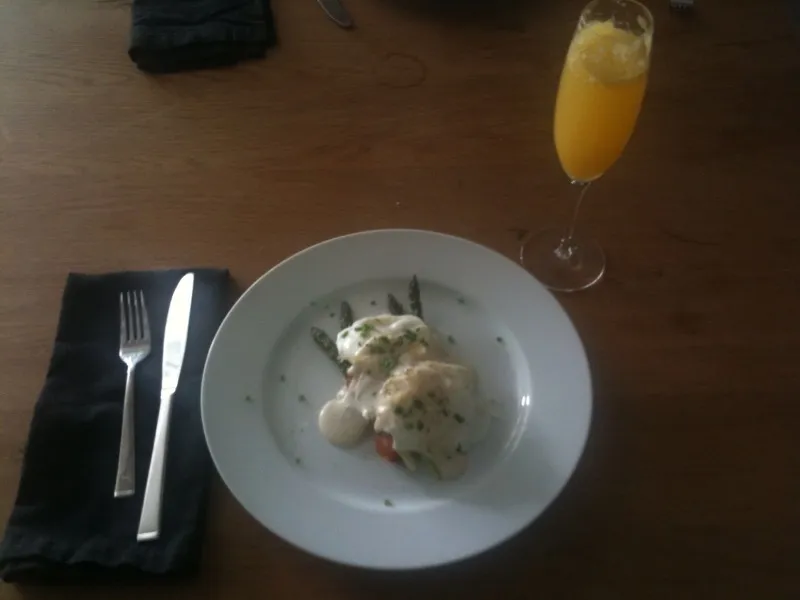
Photo: dana robinson from los angeles, ca, usa, CC BY-SA 2.0, via Wikimedia Commons
Let's be honest about brunch. For every kitchen treating the meal as a genuine culinary exercise, there are five serving the same frozen hash brown patties, the same benedict assembled from yesterday's hollandaise, the same bottomless mimosa deal that exists purely to move product. Brunch is, statistically, the most profitable service a restaurant runs — and profitability at that scale tends to breed complacency.
But it doesn't have to. The good news is that a lazy brunch menu announces itself early, and so does an ambitious one. You just need to know what to look for before you make the reservation.
The Five-Minute Brunch Menu Audit
Pull up any brunch menu online and run it through this quick filter.
1. Does anything change with the seasons? If the menu in October reads identically to the one in April, the kitchen treats brunch as an autopilot service. Real brunch menus rotate — squash and apple in fall, asparagus and ramps in spring. It's the single clearest signal of intention.
2. How many items could appear on the dinner menu? Great brunch menus borrow technique from the rest of the kitchen. If the dinner menu shows a thoughtful hand and the brunch menu shows scrambled eggs and avocado toast, you've found a kitchen that clocks out on weekends.
3. Is the bread program real? Pancakes, French toast, brioche for the benedict — brunch is secretly a bakery exam. Menus that name their bread source or bake in-house are almost always menus that care.
4. What's the ratio of bottomless deals to actual dishes? When the drinks specials outnumber the thoughtful entrées, you know what the meal is really selling. Nothing wrong with a mimosa — but it shouldn't be the headline.
5. Does the savory side get respect? A brunch menu that's three benedicts, two pancakes, and a prayer has no plan. Look for menus where the savory list is as long and as considered as the sweet.
Where Brunch Is Done Right
The exceptions are out there, and they share a pattern: the brunch menu is treated as a second menu, not a side business.
In the South, the great brunch tradition runs through the shrimp and grits belt — Charleston and New Orleans kitchens where brunch is a point of civic pride, and the mid-morning menu showcases the same seafood and rice cookery as dinner. In Texas, breakfast tacos are the whole argument: a format so good it doesn't need bottomless anything.
Out West, Los Angeles's café culture treats brunch produce with the seriousness of a farmers market stand — heaped grain bowls, market fruit, house-made pastries that would hold their own at a Paris counter. And in the Midwest, the diner tradition — Wisconsin supper-club towns, Minneapolis's old-school griddle houses — delivers a version of brunch built on craft rather than concept: real hash, real butter, real coffee.
The common thread? These are places where the brunch menu would still be worth ordering if the drinks were full price.
The Case for the Unfashionable Brunch
Here's a contrarian take worth considering: the best brunch in America might be the least photogenic one. The corner diner that's been flipping the same griddle cakes for forty years, the bakery-café where the line is entirely locals, the taquería at 9am on a Saturday. These rooms never appear on "bottomless brunch" roundups, and that's exactly why they're good. No theater, no markup on prosecco, just a kitchen that's been solving the same delicious problem for decades.
Book Smarter
Before you commit your Saturday morning: read the menu the way you'd read a dinner menu, check whether it's changed since the last time you looked, and be suspicious of any place whose brunch identity is entirely a drink special. The meal deserves better — and when you find the kitchen that agrees, brunch stops being a scam and starts being what it was always supposed to be: the most relaxed, most generous meal of the week.