Gone Without a Word: What Disappears from a Menu Tells You More Than What Stays
Restaurants love a debut. A new dish gets a server's enthusiastic pitch, maybe a little tent card on the table, possibly a social media post with moody lighting and a caption about "seasonal inspiration." But when something leaves the menu? It just... goes. No announcement. No farewell. One visit it's there, the next it isn't, and most diners never think twice about it.
That's a mistake.
The things a restaurant quietly retires from its menu are some of the most honest signals it sends. More than what gets added, what gets cut — and when, and how — reveals a kitchen's operational reality, its relationship with suppliers, and whether it's steering toward something better or quietly treading water. If you pay attention to the gaps, you start reading restaurants in a whole new way.
The Quiet Exit Is a Form of Communication
Chefs don't pull dishes on a whim. Every removal is a decision with a paper trail behind it — food cost calculations, supplier conversations, line cook feedback, plate return rates from the dining room. When a beloved item vanishes, at least one of a handful of things happened: the ingredient became too expensive or inconsistent, the dish wasn't selling well enough to justify its prep complexity, or the kitchen staff couldn't execute it reliably during a busy service.
None of those reasons are shameful. Running a restaurant is a logistical marathon, and menus are living documents that have to respond to real-world pressure. But the pattern of what disappears matters. A restaurant that regularly rotates out dishes tied to specific local farms or seasonal produce is telling you something very different than one that quietly drops items because the supply chain got too complicated or the margins got too thin.
One signals intention. The other signals strain.
Seasonal Rotation vs. Strategic Retreat
There's an important distinction between a restaurant that removes dishes seasonally and one that removes them reactively. Seasonal rotation is a sign of culinary health. A chef who builds a spring menu around ramps and fiddlehead ferns, then replaces them with summer corn and heirloom tomatoes, is demonstrating not just creativity but supply chain discipline. They're working with the calendar on purpose.
Reactive removal looks different. It tends to happen mid-season, often without explanation. The grilled salmon that's been on the menu for two years suddenly isn't available. The short rib that anchored the winter menu disappears in January rather than March. These off-cycle exits often point to supplier disruptions, price spikes, or quality inconsistencies that the kitchen couldn't absorb without compromising the dish.
If you're a regular at a restaurant and you notice dishes dropping outside of obvious seasonal windows, it's worth paying attention. It doesn't necessarily mean something is wrong — but it's a signal worth tracking.
What Complexity Costs a Kitchen
Some dishes get cut not because of supply issues but because of what they demand from the people making them. Labor-intensive preparations — anything that requires significant hand work, long braise times, or highly skilled technique — are expensive to maintain at scale, especially as restaurant staffing has remained challenging across much of the US since the pandemic reshuffled the industry.
When a dish that requires three hours of prep disappears from a menu and gets replaced by something that can be plated in six minutes, that's the kitchen adapting to its own capacity. Again, not inherently a bad thing — smart simplification can actually improve consistency. But if you notice a menu gradually shedding its most ambitious offerings and drifting toward easier executions, that's a narrative worth reading.
The best restaurants simplify with intention. They strip down to dishes they can do brilliantly every single night. The concerning version is a menu that shrinks toward mediocrity because the kitchen is overwhelmed, understaffed, or cutting corners on prep.
The Profitability Calculation No One Talks About at the Table
Every dish on a menu has a margin profile. Some items are what the industry calls "stars" — high popularity, high profit. Others are "plowhorses" — popular but low margin. And then there are "dogs" — low popularity, low margin — which tend to be the first things cut when a restaurant does a menu audit.
When you see a restaurant trim its menu significantly, especially if it was previously sprawling, it's often the result of a formal profitability review. That's not cynical — it's smart business. A focused menu usually means better execution, less food waste, and a kitchen that can actually do justice to everything it's serving.
But when the cuts feel random, or when the dishes that disappear were clearly the most culinarily interesting items on the menu, it can signal a shift in priority away from food quality and toward operational convenience. That's when a restaurant's identity starts to blur.
How to Read the Gaps Like a Regular
You don't have to be a food critic to pick up on these patterns. A few habits make it easier:
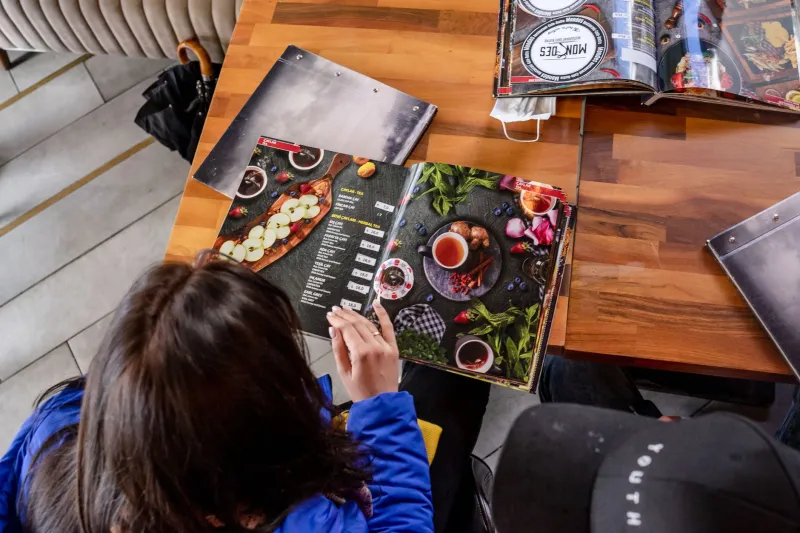
Compare menus across visits. If you dine somewhere more than a couple of times a year, take a quick photo of the menu before you order. It takes three seconds and gives you a reference point for what's changed by your next visit.
Ask your server about removals. A simple "I noticed the duck confit isn't on here anymore — is that coming back?" will usually get you an honest answer. Servers know which items got cut and often know why, at least in general terms. If the answer is "the chef is reworking it," that's different from "we couldn't get the duck anymore."
Watch for placeholder energy. When a dish gets removed and replaced with something generic — a basic pasta, a standard chicken breast, a predictable salad — that's often a sign the kitchen is filling a menu slot rather than making a considered culinary choice. It's the restaurant equivalent of a placeholder image.
Notice what stays. The dishes that survive multiple menu cycles, through seasonal changes and industry turbulence, are the ones a restaurant has committed to. Those are usually worth ordering, because the kitchen has refined them over time and the supply chain behind them is solid.
The Removal That's Actually a Promise
Not every disappearance is a warning sign. Sometimes a chef pulls a dish because they're working on something better. Sometimes an item gets retired because it was holding space that a more exciting option deserves. The best chefs edit their menus the way great writers edit their prose — ruthlessly, in service of something sharper and more true.
When a restaurant removes something and you can feel the intention behind it — when the menu that remains feels more focused, more coherent, more itself — that's a kitchen with a point of view. And a restaurant with a point of view is one worth following.
The additions will always get the attention. But keep your eye on what quietly slips away. That's where the real story lives.