That Chalkboard Special Isn't What You Think It Is
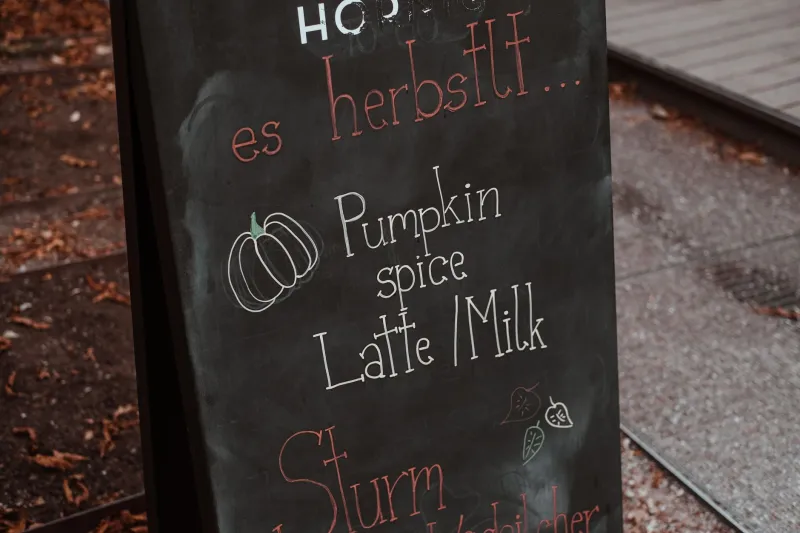
There's something undeniably romantic about the chalkboard special. It's scrawled in imperfect handwriting, usually tucked near the host stand or announced tableside with a little theatrical flair. The server leans in, lowers their voice slightly, and tells you what the chef is really excited about today. It feels exclusive. Spontaneous. Like you've been let in on a secret.
Except, more often than not, you haven't.
The daily special is one of the most misunderstood items in the American dining landscape — and once you understand what's actually driving it, you'll never look at that little board the same way again.
The Inventory Problem Nobody Talks About
Every restaurant is fighting a quiet war against spoilage. Proteins have tight windows. Produce turns fast. A delivery that came in heavy on one ingredient — say, a case of duck legs or a flat of heirloom tomatoes — needs to move before it becomes a loss. The daily special is frequently the front line of that battle.
"The special is the most honest thing on the menu," says one Chicago-based executive chef who's worked in both independent restaurants and high-volume hotel dining. "It tells you exactly what we need to sell. That's not a bad thing — it just means you need to know how to read it."
The key distinction is why an ingredient is in surplus. Sometimes it's a calculated buy: a chef spotted an exceptional product at the farmers market or landed a great deal on something seasonal that wasn't available when the printed menu was designed. That's the version of the special worth ordering without hesitation. The fish is fresh, the chef is genuinely energized by it, and the dish was built around the ingredient rather than around a problem.
Other times, the surplus is unplanned. The weekend crowd didn't materialize. A large party canceled. The kitchen over-prepped. In those cases, the special is less about inspiration and more about damage control — and the difference usually shows up on the plate.
How Chefs Use Specials to Test the Room
Beyond inventory, specials serve another purpose that's less about economics and more about evolution. Smart chefs use the daily board as a low-stakes testing ground for dishes that might eventually earn a permanent spot on the printed menu.
This is actually one of the best reasons to order a special. When a kitchen is genuinely excited about a new direction — a different preparation technique, a flavor combination they're experimenting with, a dish that reflects where the chef's head is right now — the energy in that plate is palpable. You're essentially getting a preview of where the restaurant is headed.
"I've launched some of our most popular dishes as specials first," says a Nashville-based chef-owner who runs a Southern-influenced bistro. "It lets me see how guests respond before I commit to putting it on the main menu. If it sells out three nights in a row and people are asking about it by name, that tells me everything."
In this context, ordering the special is a form of participation. You're part of the feedback loop. And that's a genuinely cool position to be in as a diner.
The Signals That Should Give You Pause
Not every special deserves your enthusiasm, though. There are a handful of red flags worth knowing before you commit.
The price feels off. Specials are sometimes priced higher than comparable menu items because the kitchen is trying to recover the cost of an expensive or over-purchased ingredient. A $48 halibut special at a restaurant where the priciest entrée on the regular menu tops out at $32 is worth a second look. Ask your server what's driving the price — a good one will give you a straight answer.
It's a protein-heavy dish with vague sourcing. If the special is a fish dish and your server can't tell you where the fish came from or how it was caught, that's not necessarily a dealbreaker, but it's worth noting. Restaurants proud of their sourcing tend to talk about it unprompted.
The description is oddly generic. Specials built around genuine excitement tend to come with specific, enthusiastic descriptions. "Pan-seared sea bass with a preserved lemon beurre blanc and spring pea shoots" tells you something. "Chef's fish of the day" tells you almost nothing — and might mean the kitchen is working with whatever needed to be used first.
Your server doesn't know much about it. A dish that a chef is proud of gets communicated to the front of house. If your server is vague, uncertain, or clearly just reading off a description they were handed five minutes ago, that's a signal the kitchen isn't particularly invested in the dish.
When the Special Is Genuinely the Best Thing on the Menu
Here's the flip side: sometimes the special really is the move. Especially at farm-to-table spots, neighborhood bistros, and chef-driven independents that build their identity around seasonal, responsive cooking, the daily board is where the kitchen is most alive.
These are the restaurants where the chef drove to the market that morning, saw something that stopped them in their tracks, and built a dish around it by noon. The printed menu is the foundation; the special is the creative expression. At places like this, skipping the board in favor of the safe, familiar entrée is arguably leaving the best of what the kitchen has to offer on the table.
A good rule of thumb: the more a restaurant's identity is rooted in seasonality and chef-driven creativity, the more seriously you should take the special. At a chain or a high-volume tourist spot, the calculus flips.
How to Ask the Right Questions
The easiest way to decode a special in real time is just to ask — but ask specifically. Instead of "Is the special good?" (which will almost always get you a "yes"), try:
- "What's the story behind this dish tonight?"
- "Is this something the chef has been working on, or is it more of a one-night thing?"
- "What made you choose to feature this ingredient today?"
A server at a restaurant with real kitchen pride will light up at these questions. They'll tell you about the farm, the technique, the chef's inspiration. That enthusiasm is itself a data point — it means the information traveled from the kitchen to the floor, which means somebody cared enough to share it.
If you get a shrug or a vague non-answer, you have your answer too.
The Special as a Window Into the Kitchen
At the end of the day, the daily special is one of the most revealing things a restaurant puts in front of you — not because of what it says, but because of what it implies. A well-executed, thoughtfully described special signals a kitchen that's engaged, creative, and paying attention. A clunky, overpriced, or suspiciously vague one can hint at operational strain, poor planning, or a kitchen that's just trying to get through the night.
Neither is necessarily a reason to walk out. But both are worth knowing.
The chalkboard is talking to you. You just have to know how to listen.